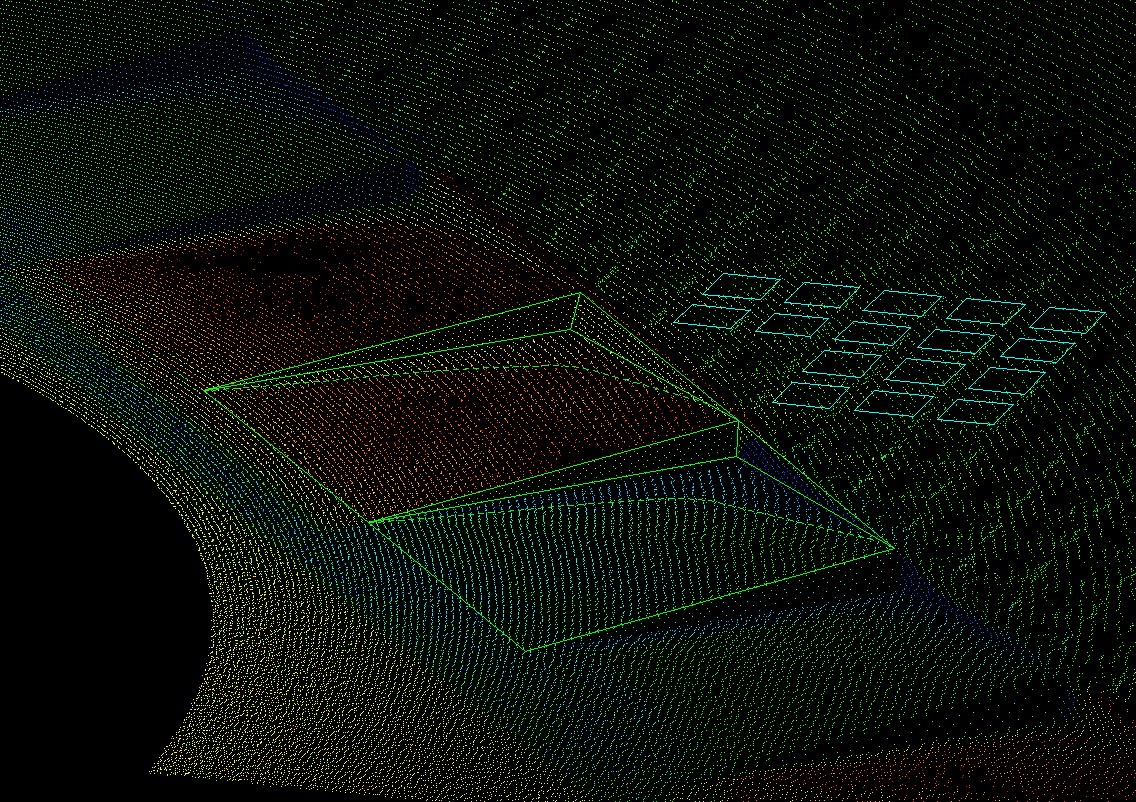
06 / Parallel Development
Spatial Engineering Services in Parallel
In parallel, neuiim is building a globally distributed, full-stack spatial engineering capability — with the explicit objective of establishing the leading spatial engineering capability in the United States and globally.
This is not merely a services business. It is the build-out of an integrated physical and digital infrastructure — comprising strategically located regional operation centres, field engineering capability, and advanced simulation environments — enabling continuous interaction with, and control of, real-world systems at scale.
These centres act as operational nodes — supporting high-precision field work across infrastructure, manufacturing, energy, defence, and the built environment.
While simultaneously hosting advanced simulation and visualisation systems capable of representing and interrogating [n]STEM in real time, from planetary scale to site-level resolution.
This architecture establishes a national and ultimately global capability — enabling neuiim to operate as a unified, full-stack spatial engineering platform across public and private sectors, civil and defence domains, and domestic and international environments.
This capability is grounded in a spatial engineering architecture previously developed by the founder and subjected to deep technical and commercial due-diligence by two tier-one global public companies — including an 18 month process with Intertek, a FTSE 100 company and global leader in assurance, inspection, testing and certification, which progressed to a proposed £10m investment for a 51% stake at Board level and a separate major validation by a leading international energy company (Statoil/Equinor).
This capability generates revenue within year one, establishes immediate market presence and has already demonstrated the potential for £100m+ single opportunities at 35%+ margin — while directly underpinning the development, calibration and operationalisation of [n]STEM.
The objective is not participation in the spatial engineering market — but dominance of it.
Operational Scope
Where spatial precision determines outcome — neuiim operates.
From nuclear infrastructure and energy systems to advanced manufacturing, defence, and real-time response to dynamic events — neuiim resolves and controls spatial state at every scale.
This extends beyond the physical world into digital and abstract domains — where events, transactions, and interactions must be resolved with the same precision across space and time.
This establishes neuiim as a foundational standard across both physical and non-physical systems — through which event state is defined, interpreted, and acted upon.
[n]STEM forms the underlying planetary system within this architecture — the manifold upon which all events are resolved.
Delivery Record
Across the operational history of the founder's spatial engineering businesses — serving clients including BP, Comau, Ferrari, FIA, Airbus Defence and Space, Subsea 7 and others — consistently precise outcomes were delivered across mission-critical applications.
From dimensional control and fabrication support to dynamic analysis, modelling, and reverse engineering, every output resolved correctly and performed as intended — first time, without exception.
At this level of execution, spatial control becomes financial control — directly determining cost, risk, and delivery certainty.
This level of execution reflects a systemised approach to spatial engineering — not isolated project delivery.
Execution at the Limit
These are not legacy projects.
They are evidence.
Each case represents mission-critical spatial engineering delivered under real-world constraints — offshore, international, high-risk environments — where precision directly determined operational success, certification, and financial outcome, frequently carrying multi-hundred-million-dollar commercial consequences.
The first case study was delivered through the creation and leadership of a specialist business unit within PSN/WOOD, a major international operator. All subsequent case studies were led and executed by the founder through his own company, operating globally across Europe, Africa, and beyond — competing directly with the world's largest incumbents and repeatedly being selected on capability, not cost.
They required far more than technical delivery:
— international mobilisation of specialist equipment
— complex logistics, certification, and compliance
— execution in hostile and constrained environments
— engineering judgement under uncertainty
From offshore vessels and subsea systems to high-performance automotive and industrial structures, the work spans multiple domains — unified by one constant:
the requirement to resolve complex physical reality with absolute precision.
This is the foundation of neuiim.
Not an idea formed in isolation —
but a system built from decades of operating at the limits of spatial engineering, where failure was not theoretical.
These case studies demonstrate the level at which neuiim is designed to operate — globally, across industries, and at the highest level of technical and operational execution.
They were delivered without external funding — built through capability, precision, tenacity, and an uncompromising standard of execution under pressure.
Selected case studies — representative, not exhaustive.
Featured Case Study — North Sea Energy — Spatial Solutions
Aberdeen, Scotland — North Sea
The founder established from zero and led a spatial engineering capability called Spatial Solutions within PSN/Wood, delivering a step-change in offshore survey, modelling, and fabrication support across multiple BP North Sea assets, including the BP Magnus platform and BP Schiehallion FPSO.
Guy's radical and initially controversial implementation of methodologies he introduced and proved in the automotive industry (Comau, Bentley and Fiat) — revolutionised offshore asset surveys, significantly improving design accuracy, reducing offshore workload and enabling unrivalled first-time outcomes across complex engineering environments.
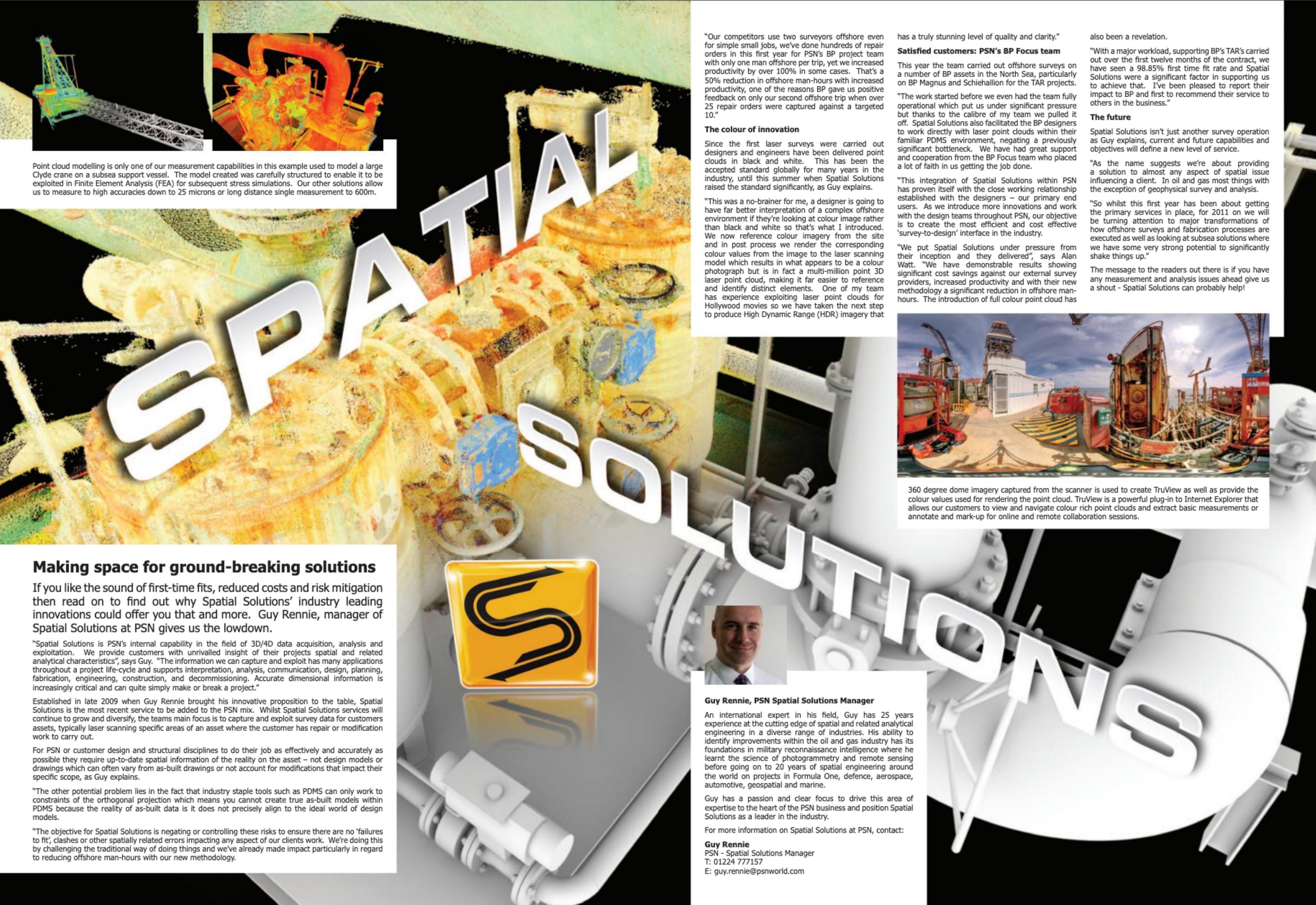
Full case study published in PSN Network Magazine · click to open PDF ↗
98.85%
First-time fit rate
derived from BP execution —
zero failure to fit from delivered outputs
100%
Reduction in offshore survey man-hours
100–150%
Productivity increase
~22%
Cost saving vs traditional survey
25 ROs
Captured in one offshore trip (single operator)
Zero
Failure-to-fit across all deliverables
throughout Guy's 2.5 yr tenure.
"We have seen a 98.85% first-time fit rate and Spatial Solutions were a significant factor in supporting us to achieve that. I've been pleased to report their impact to BP and first to recommend their service to others in the business."
— Alan Watt, BP Focus Team, PSN/Wood
This work represents mission-critical spatial control, where precision directly governs engineering outcomes, project risk, and cost.
Industry References
Global Industrial Services Organisation (FTSE 100)
18 month international technical and commercial due diligence conducted by Intertek, a FTSE 100 company and global leader in assurance, inspection, testing and certification.
At the time, the business comprised Guy (founder) and two staff — entirely self-funded through revenue, while simultaneously developing new applications and markets.
Despite this, the proposed transaction valued the capability at £10M for a 51% stake, with strategy validated for global industrial services rollout at group level and progressed to Board-level approval.
This reflected not scale, but the perceived strategic value and uniqueness of the capability.
Full transaction context and independent supporting references available on request.
Major International Energy Operator
Independent extensive validation by Statoil (now Equinor), one of the world's largest energy companies, confirming both the technical capability and commercial potential of the spatial engineering approach developed by the founder.
Full project context and independent validation available on request.
Featured Case Study — Hyperbaric Dive System & Hull Survey (Acergy)
Acergy Eagle — Durban, South Africa → Gulf of Mexico
Acergy (now Subsea 7) is one of the world's leading subsea engineering and construction companies. The Eagle is a construction, flex-lay and diving vessel for field development and construction activities operating worldwide.
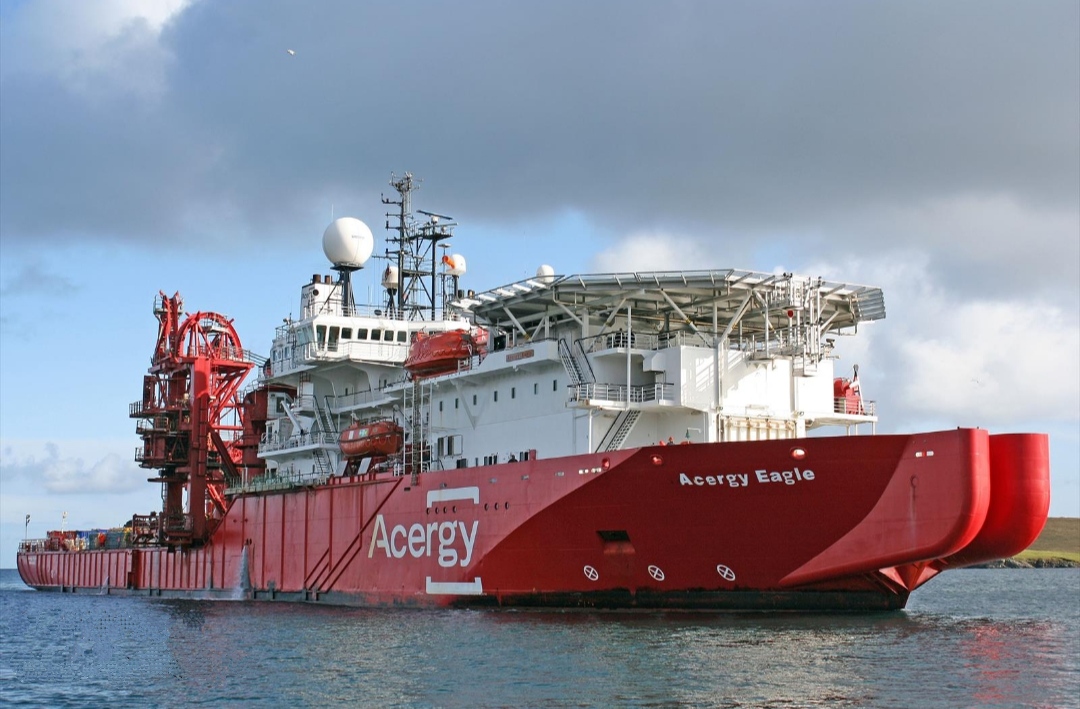
Acergy Eagle · Dive Support Vessel · Acergy / Subsea 7
Vessel Specification
Length Overall
138.44 m
Breadth
19.50 m
Gross Tonnage
9,556 t
This engagement originated from a direct approach to the founder whilst exhibiting at the Ship Repair & Conversion Exhibition in London, leading to competitive bid discussions with Acergy in Aberdeen — against Fugro, one of the world's largest survey organisations.
The founder secured the contract.
The Initial Scope
The original project requirement was to carry out a survey, inspection and modelling of the hull whilst in dry dock in Durban, South Africa, to support subsequent installation of stability sponsons on the vessel.
The founder proposed a full-hull laser scan, followed by complete 3D modelling of the hull frame and plate surfaces, integration with Acergy's sponson design CAD, virtual penetration of the hull geometry, and generation of exact fabrication profiles for steel interfaces.
This approach replaced traditional survey methods with a fully resolved spatial model — enabling precision fabrication and significantly reducing installation risk.
The Situation Changed
During execution in Durban, a critical issue emerged. Acergy's project management team received confirmation from headquarters that the United States Coast Guard (USCG) would not certify the vessel for operations in the Gulf of Mexico.
The cause: the vessel's hyperbaric dive system — a highly complex, multi-deck installation — did not have sufficient, up-to-date engineering documentation to meet certification requirements.
The vessel was already committed to a major Gulf of Mexico contract. Failure to resolve this would have resulted in loss of certification, inability to operate, major contractual and financial exposure, and significant reputational impact.
A solution was required immediately.
The Intervention
The founder was asked, on-site, whether it would be possible to capture and reconstruct the entire hyperbaric dive system. Despite extreme constraints — including limited access, complex geometry, and partial visibility — the founder assessed the system and committed to delivery.
Using a combination of Leica HDS3000 and HDS6000 laser scanners, he undertook full spatial capture of all accessible internal and external system components, pressure vessels, chambers, interconnections, and structural interfaces across multiple decks.
The work was carried out under intense time pressure, with continuous scanning over extended periods to ensure full system coverage.
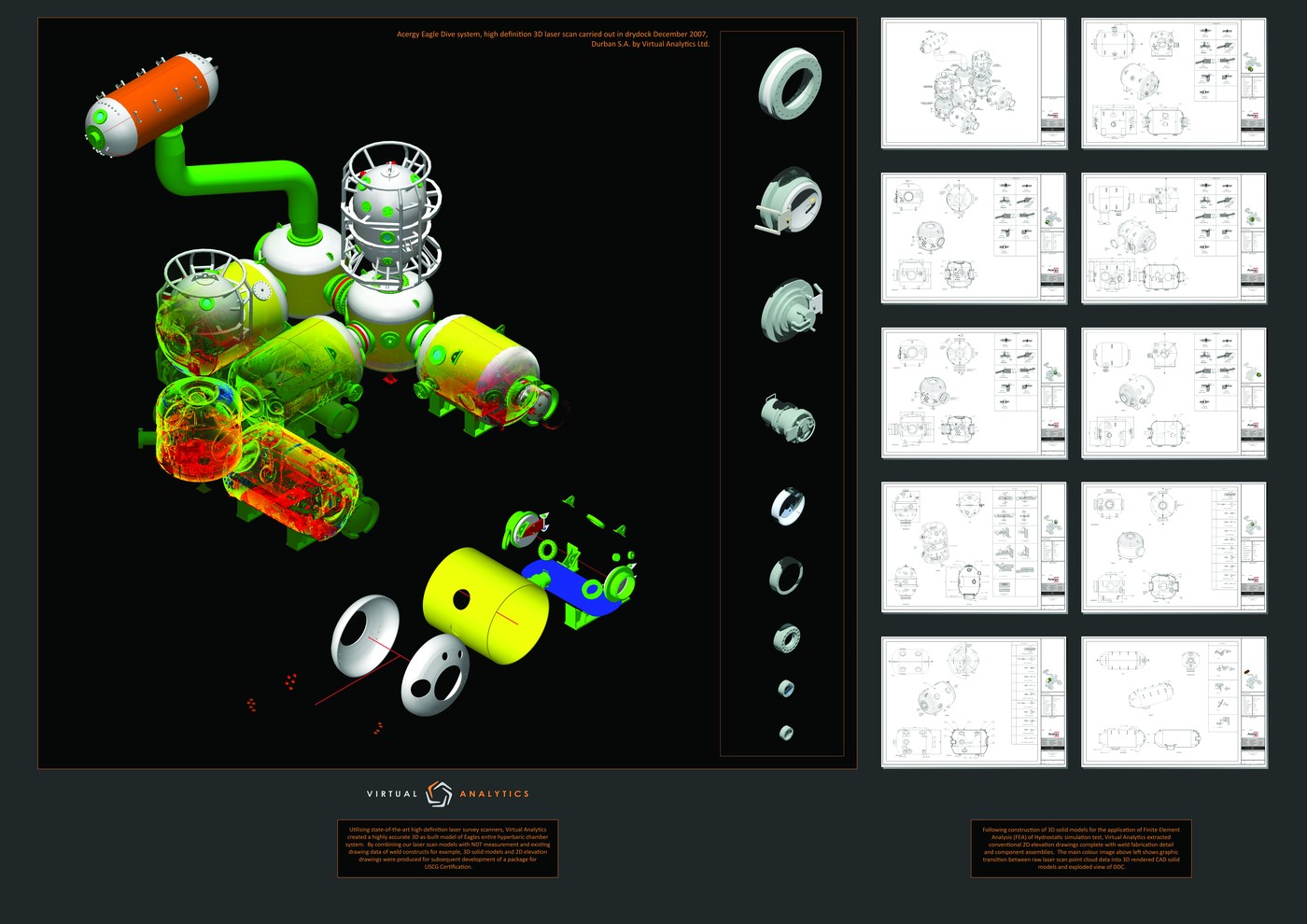
Complete hyperbaric system — 3D solid model extracted from laser scan · DDC 1–4, Forward & Aft Bell, Wetpots, HRV, Manway · Virtual Analytics Ltd
The Real Challenge
The data capture was only the beginning. On return to the UK, the work transitioned into a full-scale engineering reconstruction effort led by the founder and executed by his team at Virtual Analytics. Credit to Andrzej Kucharzak and Robert Hibbert for their exceptional work.
This involved interpreting hundreds of legacy A0 engineering drawings in multiple languages (English, Flemish, German, Norwegian), working with poorly indexed and incomplete historical documentation, integrating high-density scan data with fragmented design records, and rebuilding complete 3D models and 2D engineering drawings from first principles.
The system itself presented exceptional complexity: 18 nameplated pressure vessels, 7 different outdated pressure vessel codes and standards, materials no longer in production, significant undocumented structural modifications, wear and repairs.
In addition, certification requirements extended beyond geometry. The team was required to define and document weld interfaces across the entire system, integrate ultrasonic thickness testing (NDT) data captured on-site, and produce a fully compliant engineering definition suitable for regulatory submission.
This was not a survey exercise. It was a combined design engineering, reverse engineering, fitness-for-service, and code compliance reconstruction of a live operational system.
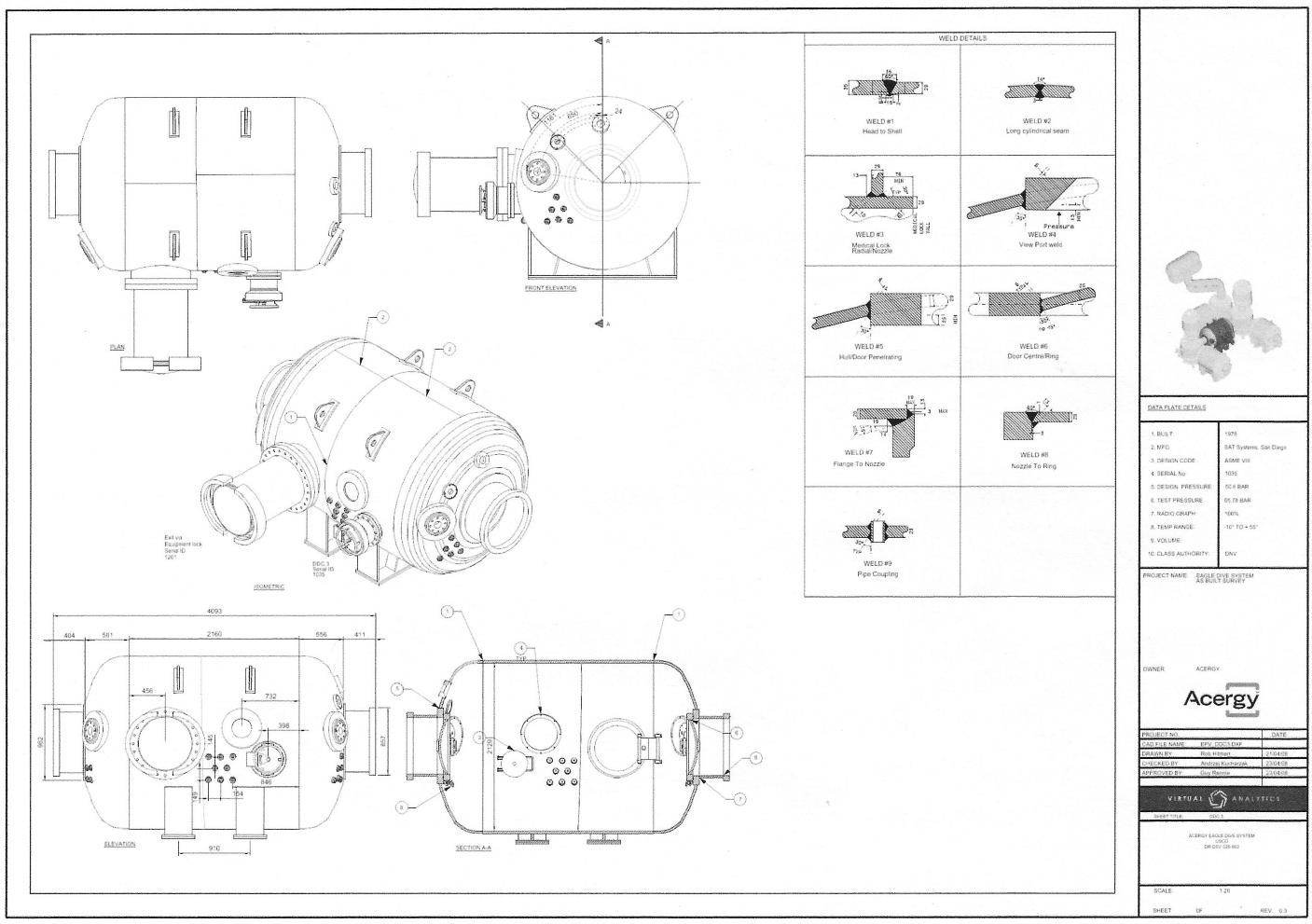
General arrangement — Eagle Dive System · Approved: Guy Rennie
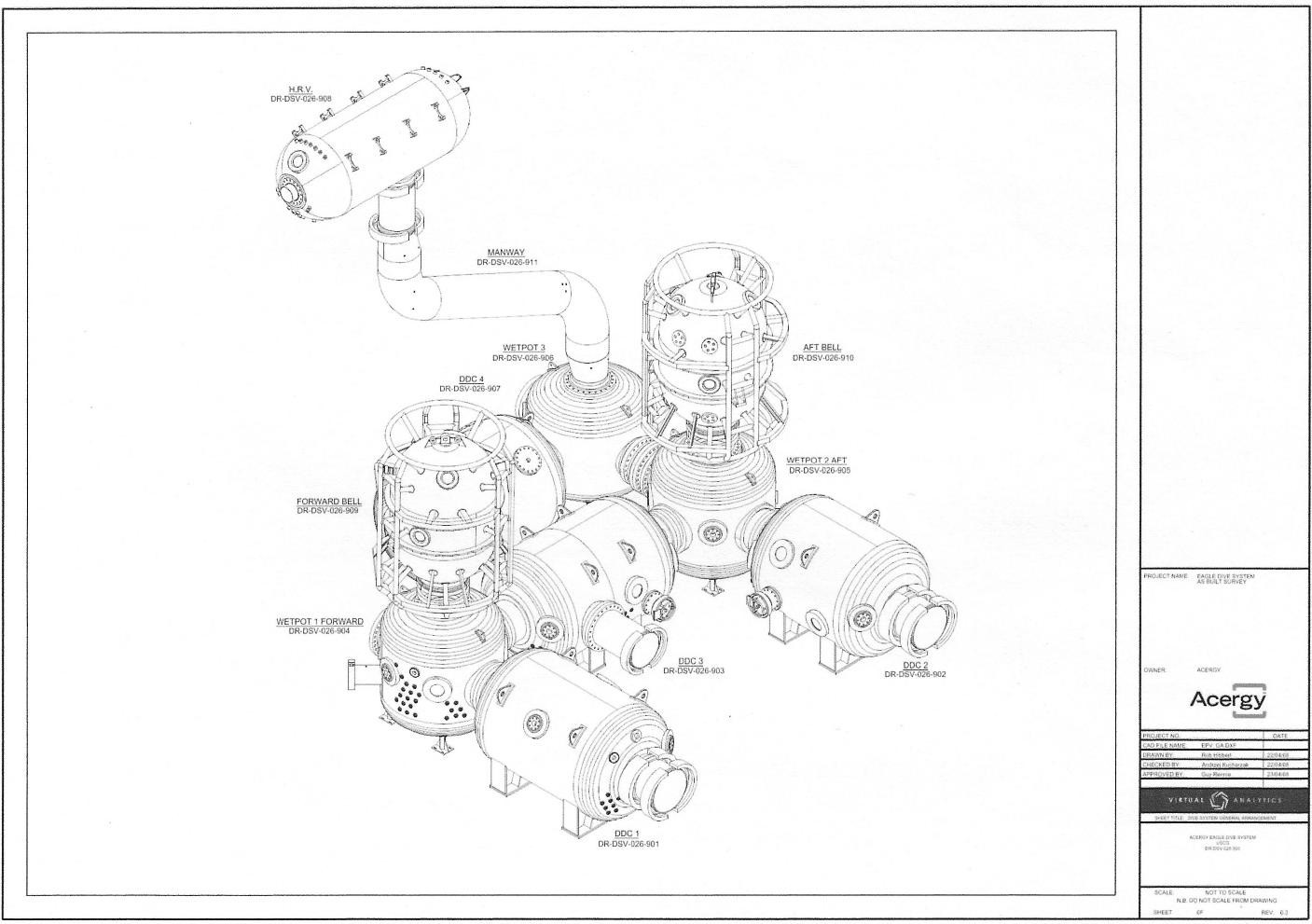
DDC component — weld details, ASME VIII · Design pressure: 10.4 BAR
The Outcome
The final deliverables included, in addition to the hull survey and modelling, full 3D as-built models of the entire hyperbaric system, a complete 2D engineering drawing package, and certification-ready documentation aligned to USCG requirements.
The vessel was certified.
Acergy was able to proceed with Gulf of Mexico operations, protect a high-value contract, and avoid substantial financial and operational loss.
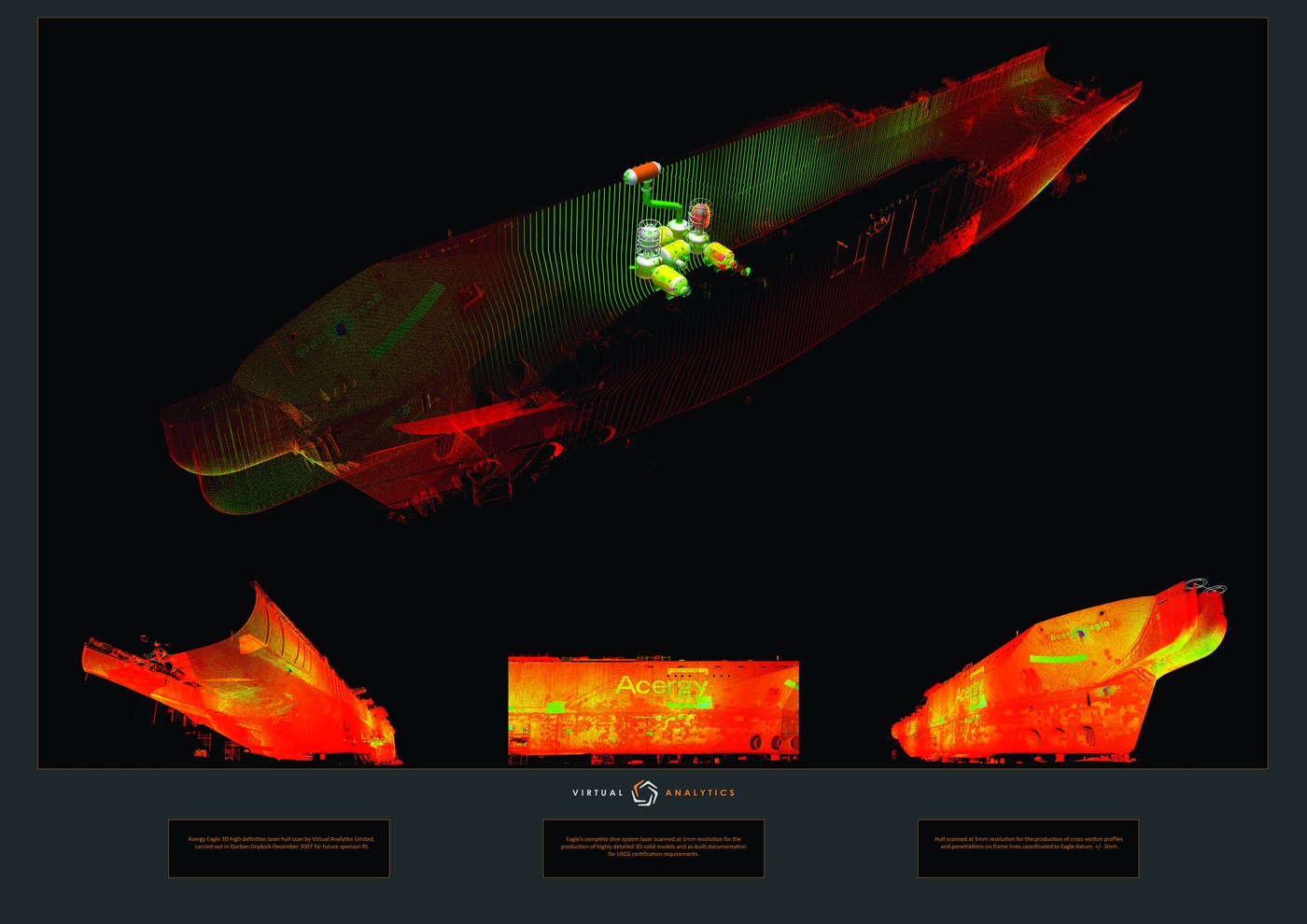
Full vessel hull pointcloud · Hyperbaric system located within hull · Virtual Analytics Ltd
Strategic Impact
This project established the founder and his company as a high-trust, high-performance capability within Acergy. Following delivery, the founder was invited to present the work to senior management at Acergy's global headquarters in Paris. The company secured further major project work, including award of subsequent contracts in Angola. Acergy selected the founder's team over larger competitors — including Fugro — citing superior quality, innovation, and execution.
What This Demonstrates
This project represents spatial engineering at the highest level of execution — where the ability to reconstruct and validate physical reality determines whether a system can operate at all.
It required full-system reverse engineering under time-critical conditions, integration of incomplete, conflicting, and multi-standard legacy data, reconstruction of a complex hyperbaric system to certification standard, and delivery of a complete engineering definition where none existed.
The resulting drawing package was submitted to the United States Coast Guard. It was not only accepted — Acergy were formally complimented by the USCG on the quality of the documentation, describing it as among the highest-quality submission packages they had reviewed.
At the time, this level of spatial capture, modelling, and engineering reconstruction — delivered under these constraints — was beyond the capability of most organisations globally.
This is the standard of spatial engineering capability upon which neuiim is built.
"We used Virtual Analytics managed by Guy Rennie to do a laser as-built survey and modelling of the dive ship 'Eagle' 130m hull whilst in dry dock in South Africa. The job expanded to include an as-built survey and CAD modelling of the ship's entire Diving Chambers and hyperbaric system. The job was extremely complex as we had limited access to the ship and virtually no existing technical drawings or data. Guy has shown a great commitment, enthusiasm and energy to get the job done to the highest possible standard on what was a mission critical project for us, and was glad for having selected him."
— Jean-Baptiste Pose, Project Engineering Manager, Acergy
Featured Case Study — High-Pressure Heat Exchangers (Villa & Bonaldi)
Ricengo, Italy → Sakhalin Island
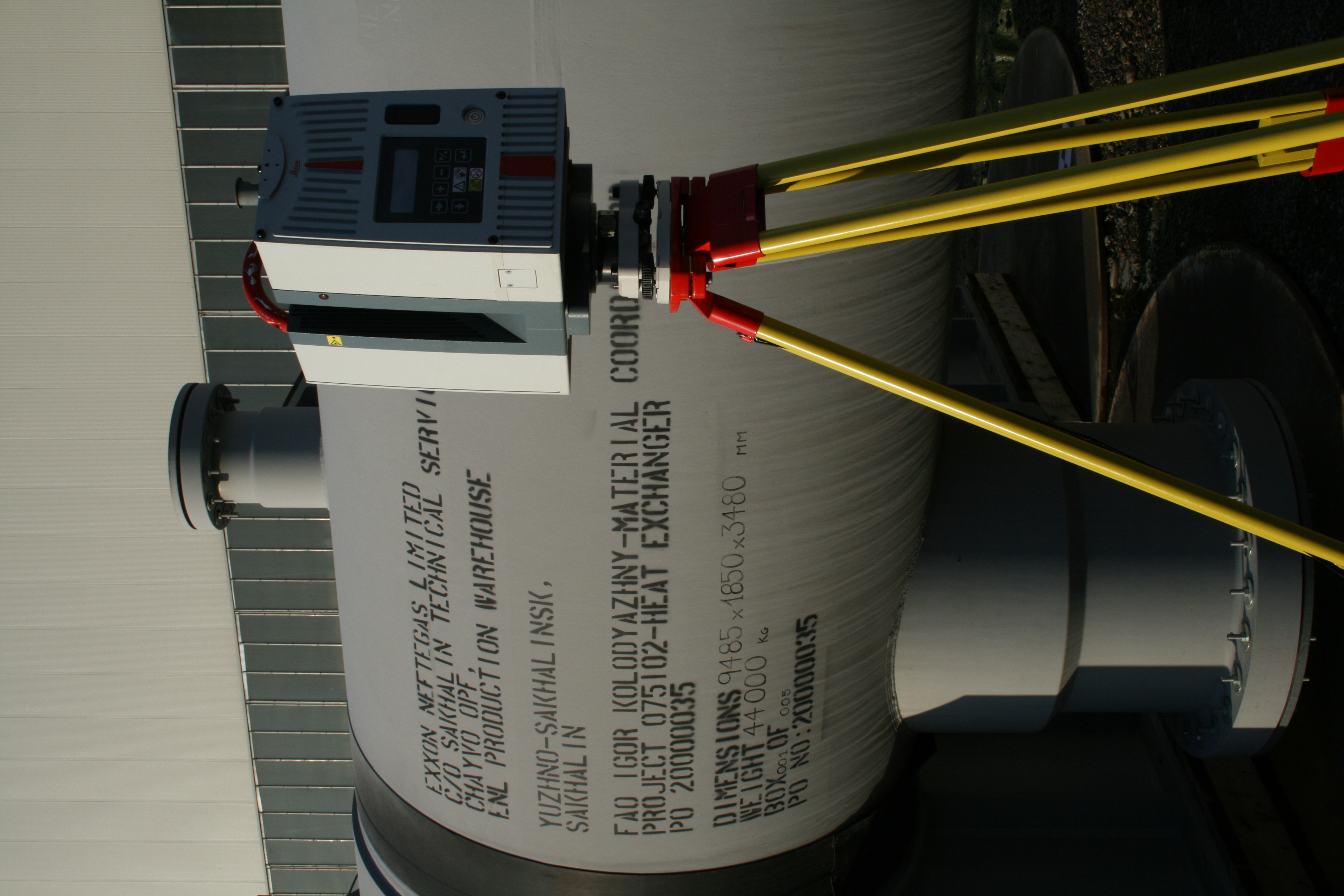
Leica HDS3000 laser scanner on-site · Villa & Bonaldi facility, Ricengo, Italy
Equipment Specification
Type
Heat Exchangers
Quantity
2 + multiple interconnecting pipework
Largest Unit
~20 m length
Destination
Exxon — Sakhalin Island
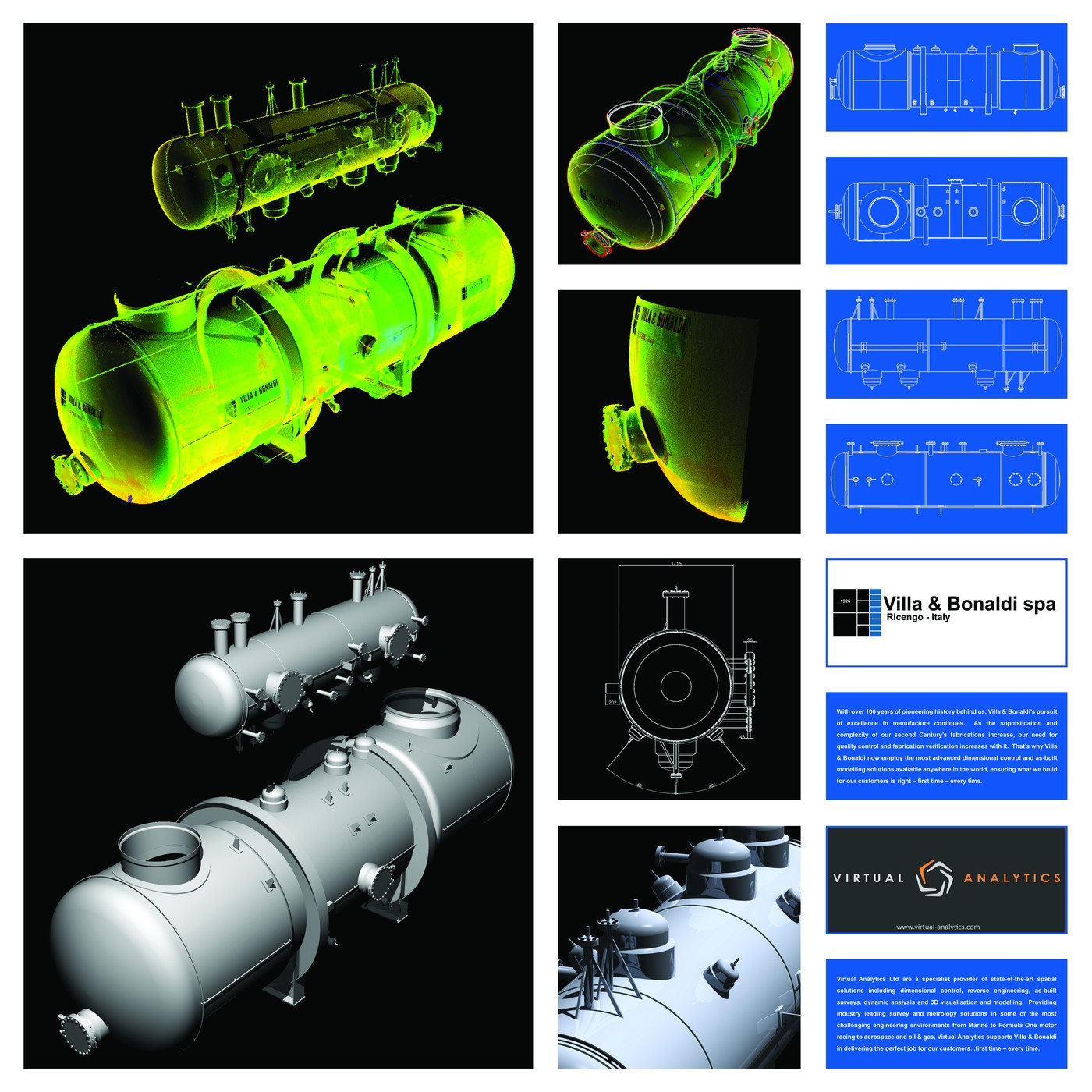
Green — laser pointcloud · Grey — 3D solid model · Blue — 2D elevation drawings · Virtual Analytics Ltd, Ricengo Italy, 2007
Villa & Bonaldi is a long-established manufacturer of high-pressure shell-and-tube heat exchangers used in oil & gas, petrochemical, and power applications.
The company was fabricating two large, multi-million-dollar heat exchangers — the largest approximately 20 metres in length — destined for installation at a refinery project on Sakhalin Island.
This project was delivered through the founder's former company, Virtual Analytics Ltd. The founder personally carried out the on-site laser scanning at the Villa & Bonaldi facility in Ricengo, Italy, with subsequent modelling, analysis, and documentation completed by the Virtual Analytics team at Silverstone in the UK.
The Problem
Once the heat exchangers left the factory, they would be subject to multiple crane lifts, long-distance road transport, extended sea transit, and significant handling and environmental loading.
Any distortion, misalignment, or deviation could prevent correct installation, cause interface and connection failures, lead to contractual disputes between manufacturer, shipper, and operator — creating major financial and operational risk.
Traditional measurement methods such as theodolite surveys could verify individual points but could not provide a complete and defensible spatial record of the entire structure.
Villa & Bonaldi required definitive proof that what left their factory was correct, complete, and within specification.
The Intervention
The founder personally conducted the full on-site data capture at the Villa & Bonaldi facility using a high-precision terrestrial laser scanning system (Leica HDS3000). Multiple scans were acquired to ensure full coverage of both heat exchangers, capturing the complete geometry at sub-millimetre precision.
Following capture, the dataset was processed to produce full-body point-cloud models, high-accuracy as-built 3D models, and detailed analysis of roundness, flange and bolt-hole alignment, mounting interfaces, and structural tolerances.
A critical part of the work involved virtually assembling the two heat exchangers within a unified digital model to verify flange and bolt-hole alignment, mating interface accuracy, and geometric compatibility of connected pipework.
The Outcome
The client received a complete and authoritative spatial record of both units at the point of departure. The dataset provided objective proof that the equipment met design specification prior to transport. The deliverables supported insurance requirements and significantly reduced contractual risk.
Structural Insight
This project resolved a critical problem — but only at a single moment in time. It established a definitive spatial state at the point of departure. However, that truth existed only as a documented point in time. Beyond that moment, continuity could not be maintained. [n]STEM will change that.
Why This Matters to [n]STEM
This case highlights the need for high-precision spatial truth — and the role [n]STEM plays in transforming it from a captured moment into a continuous, resolved reality.
Featured Case Study — Aeroelasticity Analysis — Wind Tunnel (Confidential)
Formula One — Multiple team clients over several years operating in F1
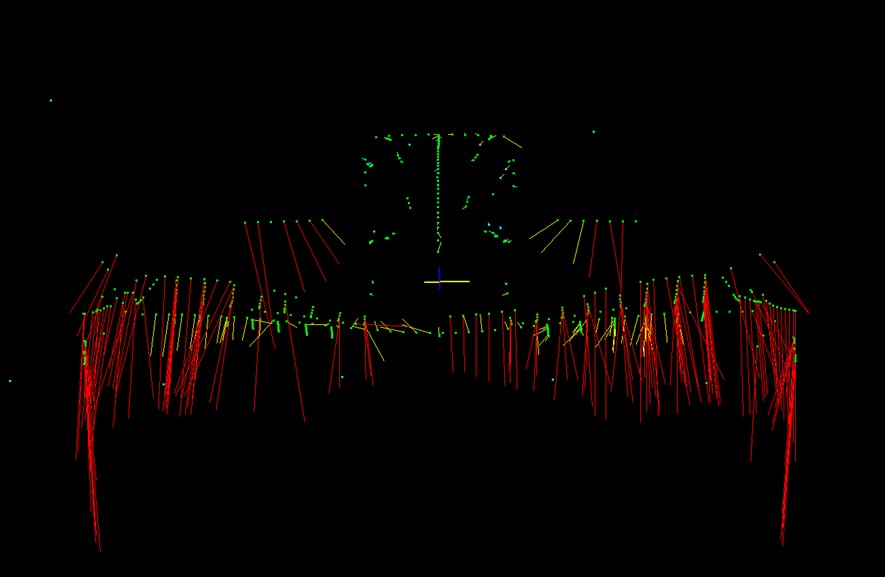
Wind tunnel aeroelasticity analysis · XYZ deflection vectors at speed · Green — measurement points · Red/Yellow — deflection magnitude and vector · Virtual Analytics Ltd
This work was carried out in Formula One motorsport — widely regarded as one of the most technically demanding, dynamic, high-pressure, and competitive industries in the world.
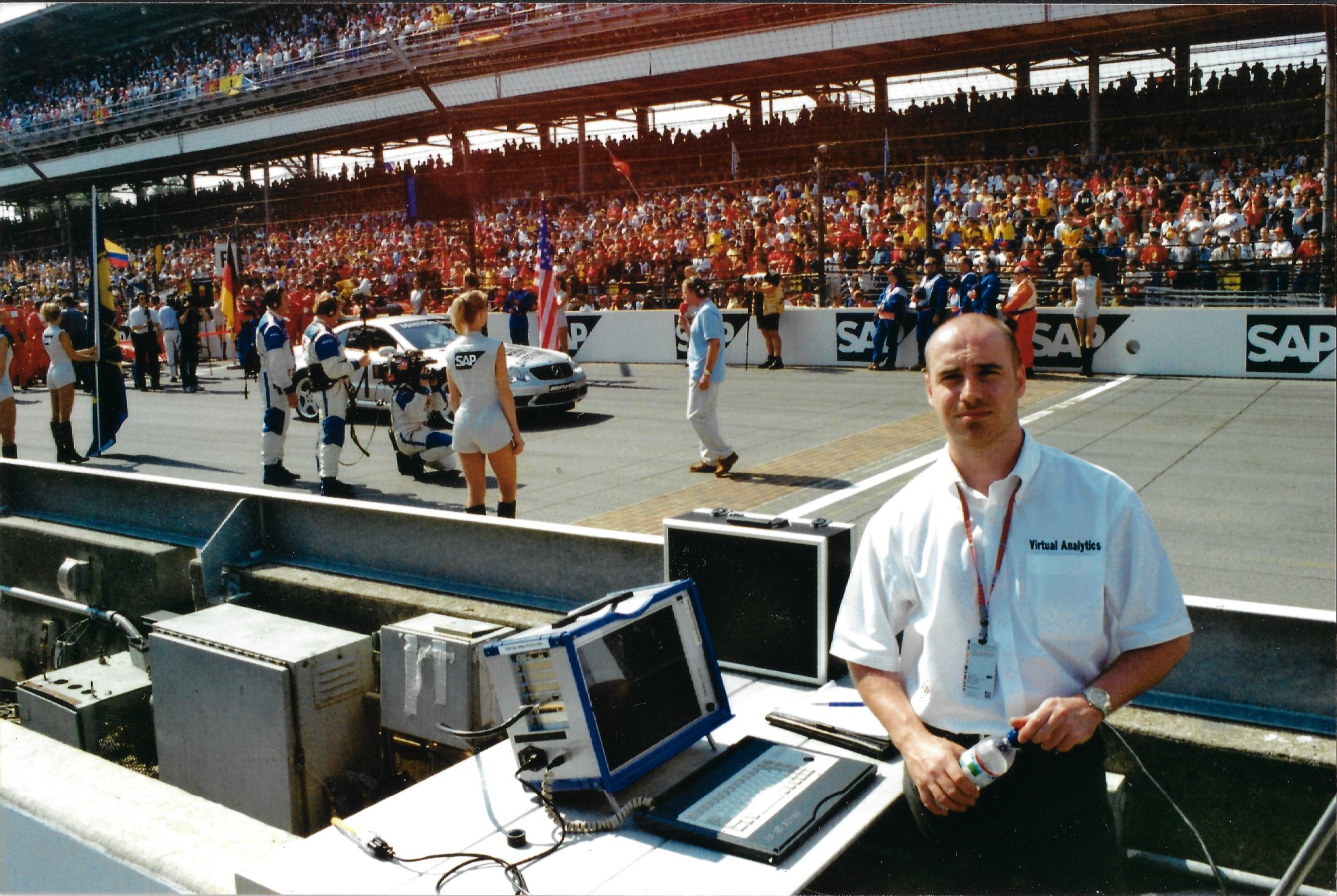
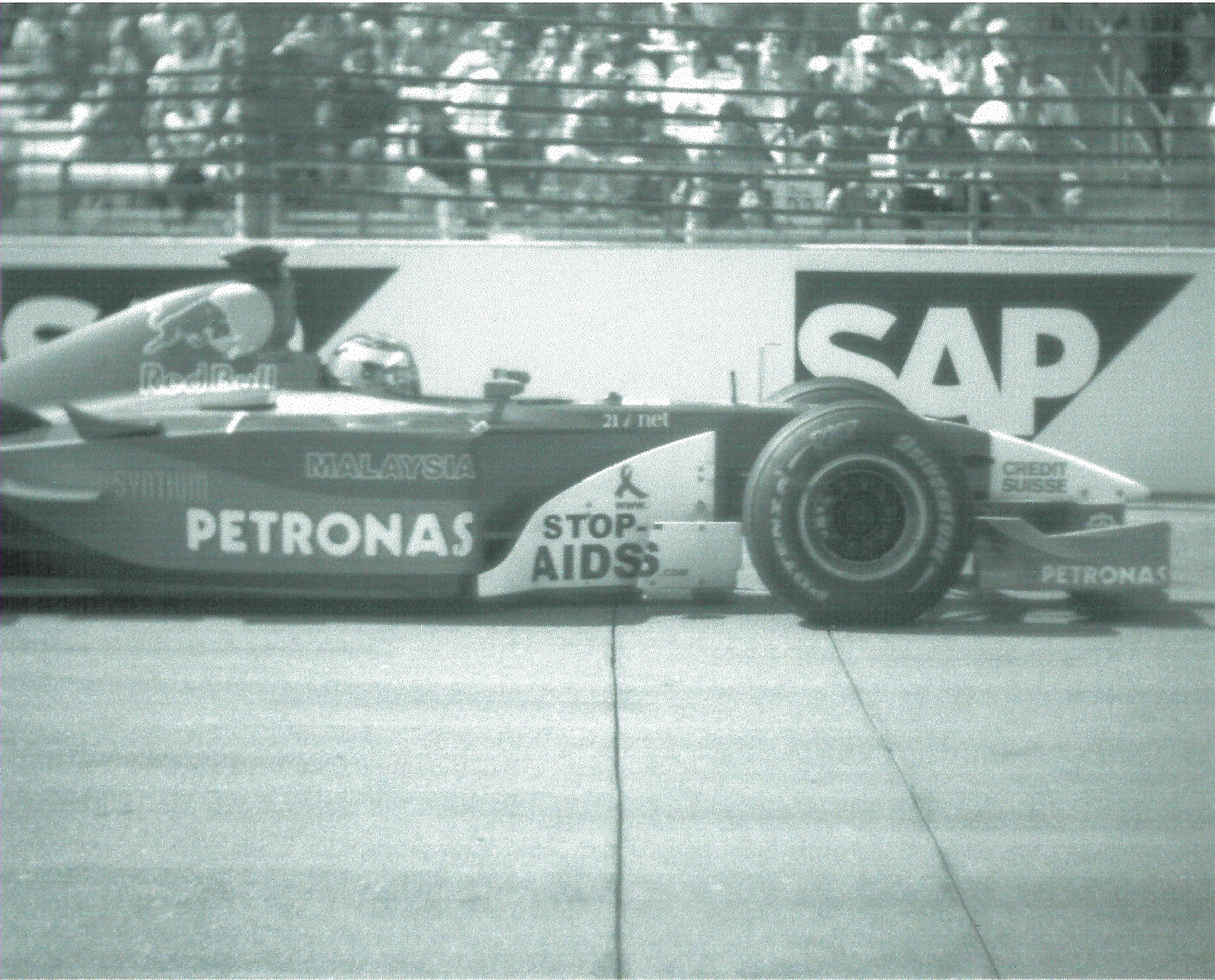
The founder was engaged directly by Charlie Whiting, FIA Formula One Race Director, and multiple F1 teams over multiple years, primarily in the application of his unique high-precision, non-contact aeroelasticity analysis work both on track during tests and F1 qualifying and races and inside wind tunnels. The work included bleeding edge high-precision (sub 30 micron) dimensional control and reverse engineering, dynamic analysis and 'special' applications. Some of the capabilities and methodologies deployed by the founder have still not been replicated by teams or suppliers to this time.
One area of work involved high-precision dimensional reverse engineering of hand-fabricated V10 exhaust assemblies. Each exhaust system is individually manufactured — a precision artefact in its own right — and teams required an exact 3D CAD record of what was actually built and how components integrated together. Using structured light scanning, the complete assembly was captured to 35-micron accuracy.
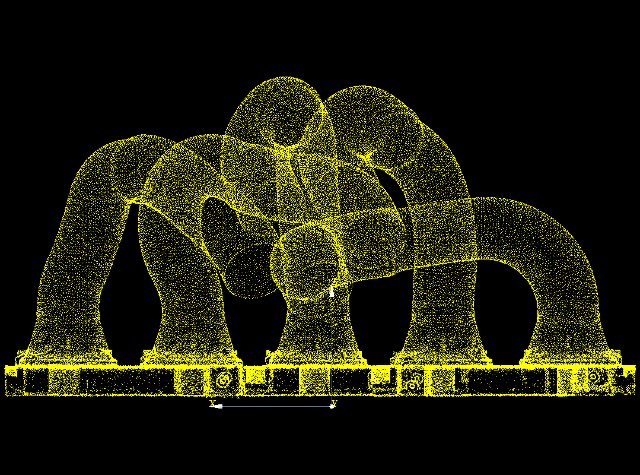
V10 exhaust assembly · Structured light scan pointcloud · 35-micron accuracy · Virtual Analytics Ltd

STL surface model · Close-up detail · Surface precision at 35 microns · Virtual Analytics Ltd
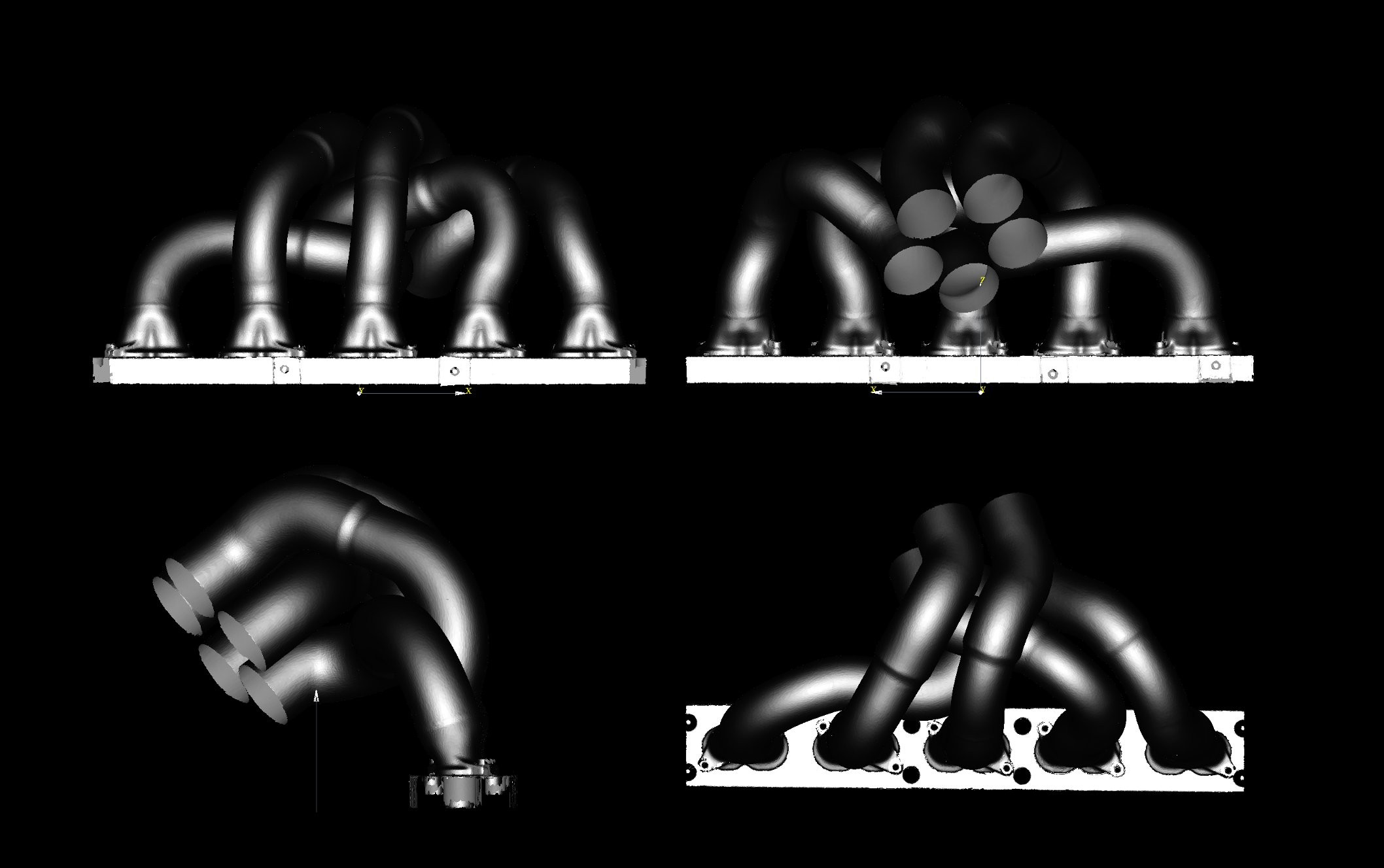
V10 exhaust assembly — four-view 3D solid model · Extracted from structured light scan data · Virtual Analytics Ltd
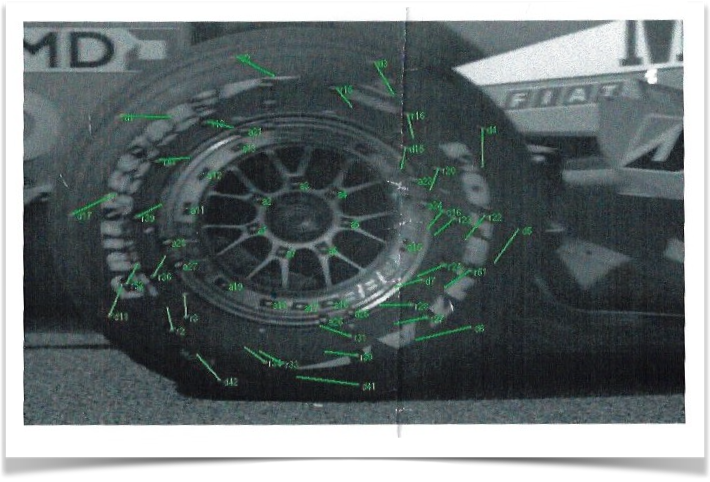
A powerful extension to the founder's high-speed dynamic analysis of F1 cars' aerodynamic surfaces was the analysis of tyres under differing loads, such as this example with Ferrari and Bridgestone.
Testing was conducted at Mugello, Italy. The vehicle passed a defined measurement point at approximately 215 mph, within one metre of the capture position.
Using high-speed photogrammetric techniques, the system resolved sub-millimetre deformation across the tyre surface in three dimensions — capturing dynamic structural behaviour under load in real time.
Project Specification
Project
High-speed race tyre deformation analysis
Client
Ferrari / Bridgestone
Location
Mugello Circuit, Tuscany, Italy
Test Speed
215 mph / 346 kph
Precision
<1mm x, y, z
The data revealed multiple concurrent deformation effects, driven by aerodynamic load, rotational forces, and track interaction — changing continuously across the tyre structure.
Critically, the analysis also identified deformation occurring within the wheel rim itself. This condition had not been previously detected.
Testing was halted. All rims were returned to the manufacturer for investigation. A manufacturing defect was subsequently confirmed. This intervention occurred prior to potential structural failure at racing speed.
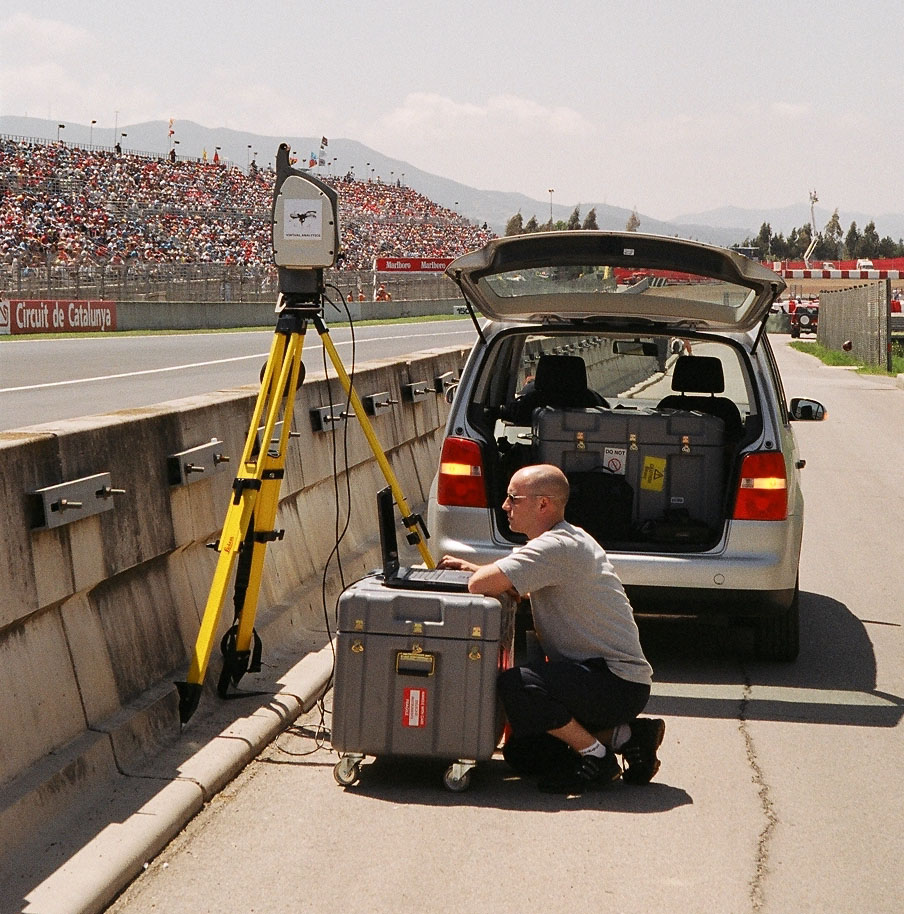
Spatial analysis and modelling extended to the track surface itself, illustrated here with sub mm scan data of the kerbs at Circuit de Catalunya with some 3D CAD extraction.
Circuit de Catalunya · Spanish Grand Prix · Leica laser scanning system · Virtual Analytics Ltd
Circuit de Catalunya · ~1mm precision kerb surface scan · Laser point cloud with extracted 3D CAD elements · Virtual Analytics Ltd
These projects required more than measurement. They required the ability to resolve physical reality under extreme conditions — speed, proximity, and consequence — where precision directly governs outcome.
In this environment, uncertainty is unacceptable. Only resolved truth is sufficient.
Featured Case Study — Structural Reverse Engineering for FEA (Acergy Polaris Crane)
Cape Town, South Africa — Offshore Heavy Lift Operations
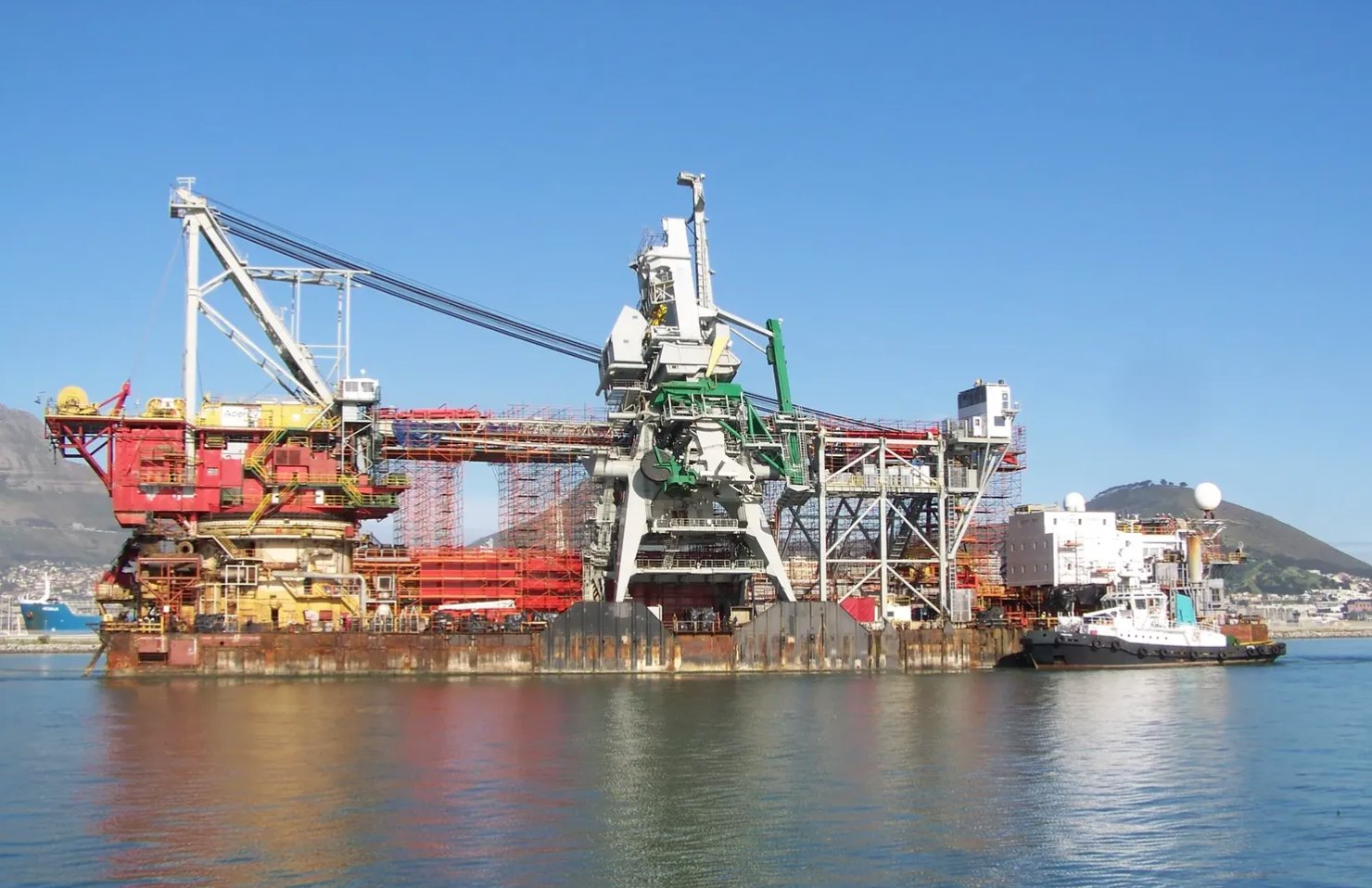
Acergy Polaris — Cable, Pipelay and Heavy Lift Vessel, Cape Town.
Crane Specification
Crane Type
Clyde Lattice Boom
Boom Length
76 m
Originally Built
1979
Application
FEA Structural Validation
Acergy required a full engineering model of the Clyde lattice boom crane installed on the Acergy Polaris to enable finite element analysis (FEA) ahead of a major offshore contract that would push the crane to its operational limits. No accurate or up-to-date engineering drawings existed for the structure in its current condition.
The Problem
The crane — a 76-metre lattice boom structure originally built in 1979 — had undergone decades of operational use, modification, and repair. To proceed with structural validation and certification, a complete engineering definition of the crane was required, finite element analysis needed to be performed, and an accurate and usable 3D model was essential.
No reliable as-built data existed. Real-world deformation, wear, and repair history were unknown. The structure could not be analysed without reconstruction.
The Intervention
Following previous successful delivery on the Acergy Eagle, the founder proposed full 3D capture using high-precision terrestrial laser scanning. A field team was deployed to Cape Town to carry out the survey using Leica HDS3000 and HDS6000 systems, capturing the complete geometry of the crane and boom under operational conditions.
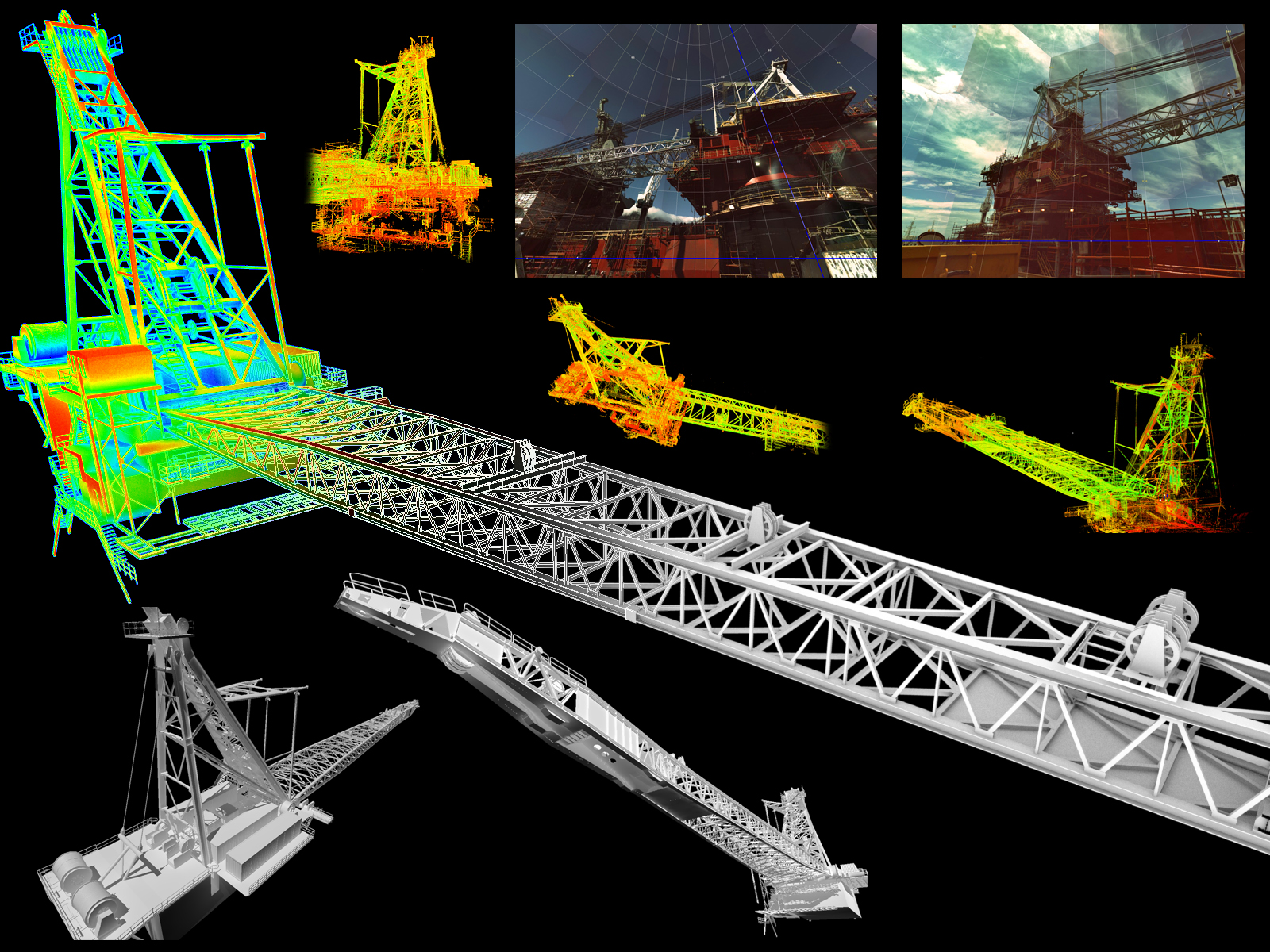
Acergy Polaris Clyde crane with 76m lattice boom · Laser pointcloud blend morph to 3D solid model · Virtual Analytics Ltd, Cape Town 2008
The Engineering Challenge
The data conditioning alone required full registration of the crane point cloud, removal of thousands of scaffold elements from the dataset, and compensation for wind-induced deflection during capture.
True as-built reconstruction required complete 3D modelling of the crane in its actual condition — including deformation, twist, repair history, and asymmetry built up over decades of operational use.
The true as-built model could not be used for FEA. A second model was required.
A corrected as-built geometry was produced — restoring structural alignment and symmetry, removing irregularities while preserving engineering intent. This required precise interpretation of real-world geometry and translation into an analysis-ready structure.
The Outcome
The project delivered full 3D CAD models (true and corrected as-built), a complete 2D engineering drawing set, and an analysis-ready structural model for FEA. This enabled Acergy to perform structural analysis of the crane, validate performance under projected loads, and proceed with certification and operational deployment.
The work was delivered on time and to the full satisfaction of the client.
Structural Insight
This project demonstrates the ability to bridge the gap between physical reality and engineering abstraction — transforming imperfect, real-world structures into precise, decision-ready models.